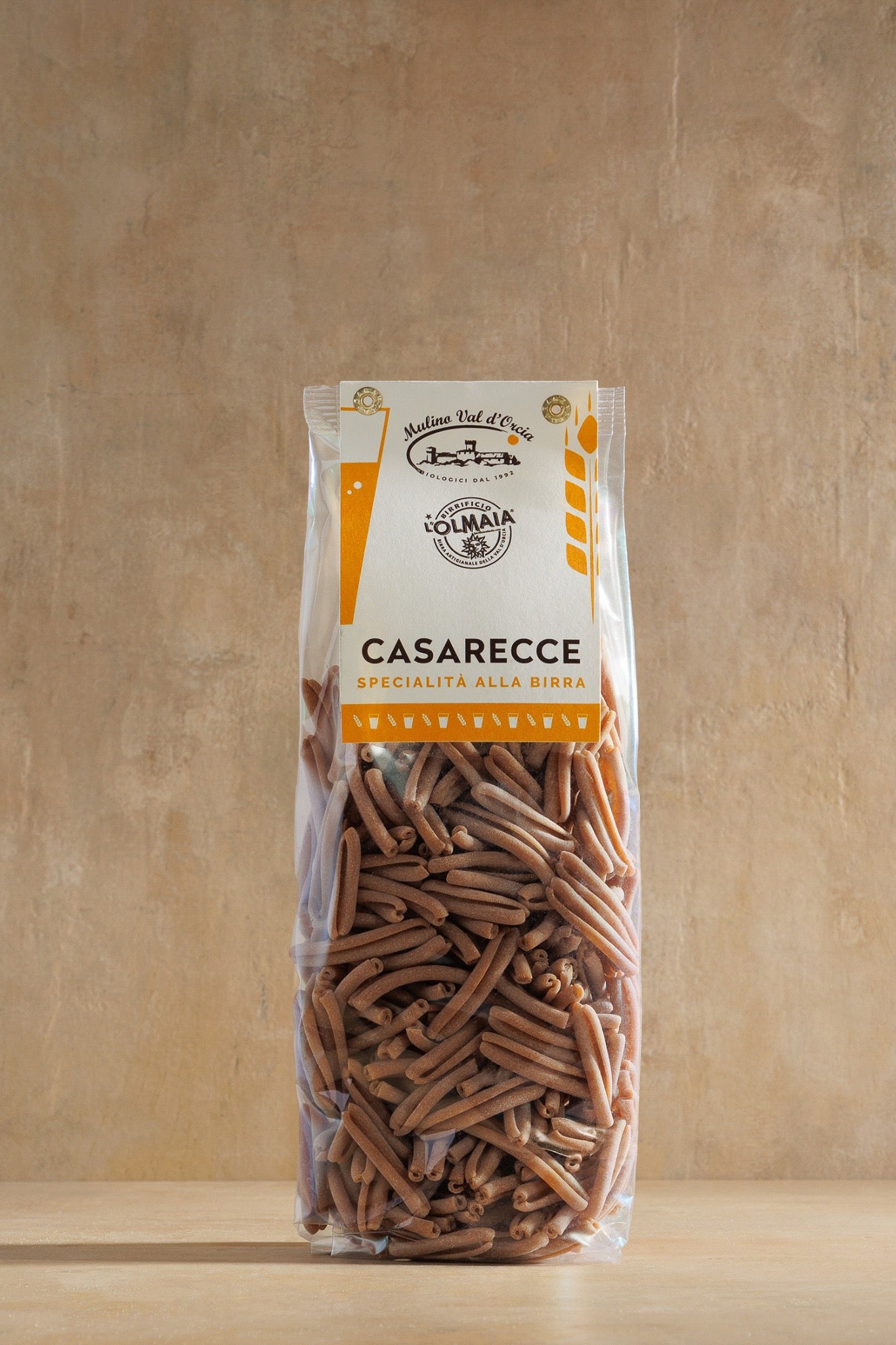
Beer Pasta
Beer Pasta
Couldn't load pickup availability
Pasta made with beer. Yes, really.
Tuscan ancient grain pasta where Italian craft beer replaces the spring water in the dough. Malt depth, yeasty bite, deeper color.
Stone-milled ancient Tuscan grains, drawn through bronze dies, slow-dried at low temperature. The only twist: beer in the dough, not water.
Why beer in the dough. The malt sugars caramelize during drying, deepening the wheat color and adding a quiet roasted sweetness. The natural carbonation gives the dough an extra-textured, slightly chewy bite.
Bronze die, slow dry. Industrial pasta is teflon-extruded and dried hot in a few hours. Bronze die gives the rough texture that holds sauce; low-temperature drying preserves nutrients and flavor.
WHY YOU'LL LOVE IT
- Italian craft beer instead of water in the dough
- Stone-milled, ancient Tuscan grain
- Bronze die for rough, sauce-grabbing surface
- Slow-dried at low temperature
- Genuinely different: a pasta with character, not a novelty
HOW TO ENJOY IT
- Cook 10 to 12 minutes in well-salted boiling water (1 L per 100 g)
- Pairs beautifully with hearty ragu, mushroom, or sausage sauces
- Try with brown butter and sage, or a pecorino + black pepper carbonara twist
- Excellent foundation for a stout-and-mushroom braise
SPECIFICATIONS
- Producer: Mulino Val d'Orcia, Tuscany, Italy
- Origin: Val d'Orcia, Tuscany (UNESCO area)
- Grain: Ancient Tuscan grain
- Ingredients: Organic ancient-grain wheat semolina*, Italian craft beer*. (*organic ingredient)
- Allergens: Wheat (gluten), barley (from beer). May contain traces of mustard.
- Certifications: Organic
- Net weight: 500 g (17.6 oz)
- Cook time: 10 to 12 minutes
🌱 Organic | 🌾 Bronze die | 🏺 Heritage grain | 🍺 Made with craft beer | 🇮🇹 Made in Tuscany
This information is for educational purposes only and is not intended as medical advice. Consult a qualified healthcare professional before making changes to your diet.
Terra Sacra Field Notes — Health Properties
- Heritage wheat profile. Ancient Tuscan grains have a different gluten structure than modern industrial wheat, often reported as easier to digest by people with mild wheat sensitivity (though not safe for celiac disease).
- Whole, stone-milled grain. Stone milling preserves the bran, germ, and natural aromatic compounds that high-speed steel roller milling destroys.
- Lower glycemic load. Slow-dried, bronze-die pasta combined with whole-grain semola tends toward a lower glycemic response than industrial refined pasta.
- Pesticide-free, glyphosate-free. Grown on certified organic land in the UNESCO Val d'Orcia, no synthetic inputs.
- Plant protein. Ancient grains are naturally protein-rich, contributing useful plant protein to a Mediterranean diet.