

Frequently Asked Questions
What does raw honey mean, and why does it matter?
Raw means never heated above hive temperature — about 35–40°C (95–104°F). Industrial honey is pasteurized at 60–70°C or above to prevent crystallization and produce the clear, uniform look that store shelves want. That process destroys enzymes, antioxidants, and aromatic compounds. Raw honey retains them and tastes like where it actually came from. Bees forage up to 5km from the hive, so the character of the surrounding landscape ends up in the jar — which is why the placement of the hives, in wild or clean-forage land, shapes the final honey as much as the flower does.
My honey crystallized. Did it go bad?
Not at all — crystallization is actually a good sign. It means the honey wasn't over-filtered or overheated to delay it cosmetically. All raw honey crystallizes eventually. To re-liquefy: warm water bath, under 40°C (104°F), wait. No microwave. You bought raw honey for a reason. Don't cook it.
Orange blossom, eucalyptus, millefiori — what's the difference?
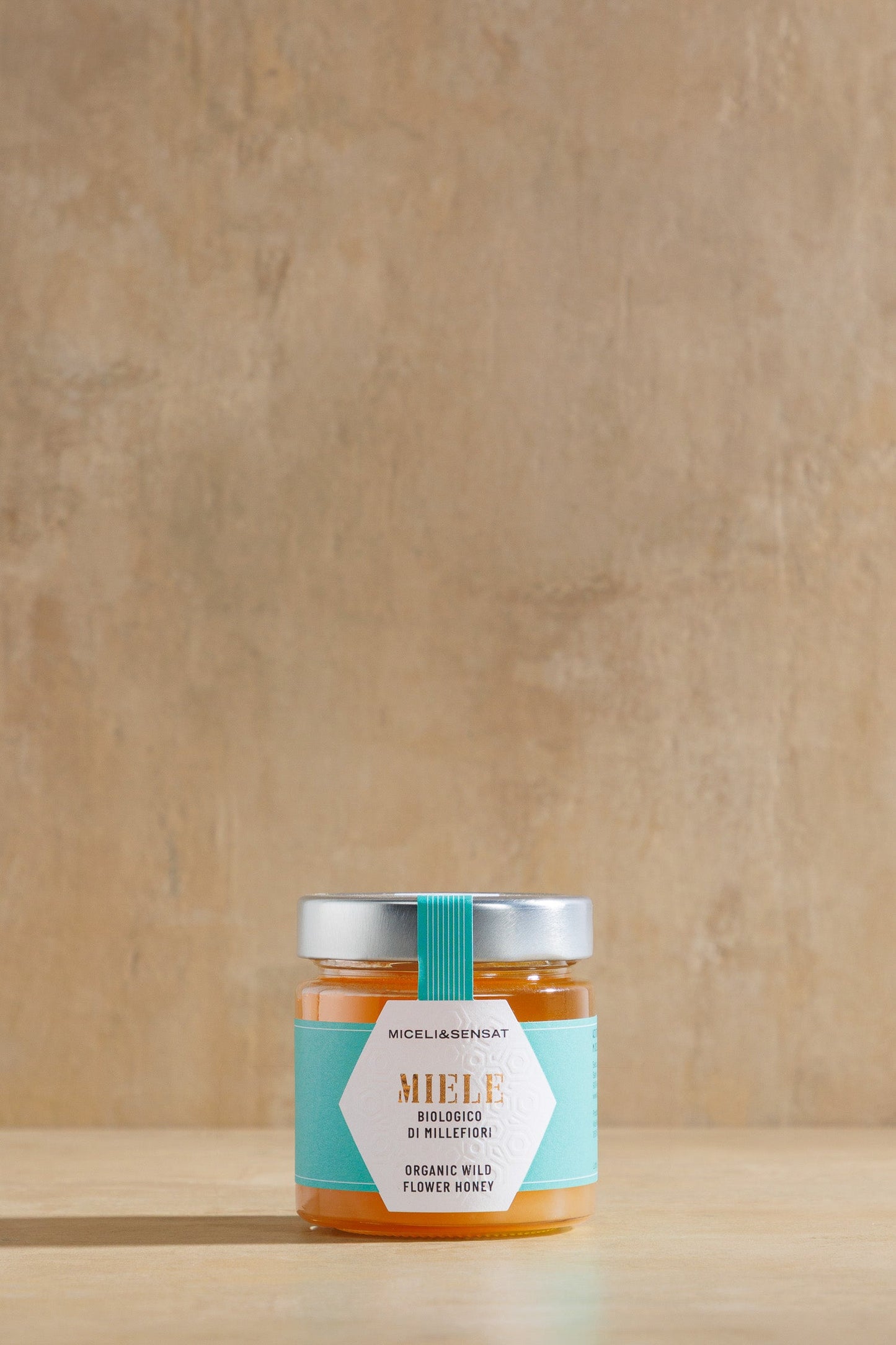
Orange blossom (arancio): delicate, floral, light. Perfect in tea, on yogurt, in Sicilian pastry. One of Italy's most distinctive honeys. Eucalyptus: darker, earthier, bittersweet with a mentholated edge. The classic Sicilian pairing is aged sheep's cheese — it sounds odd until you try it. Millefiori (wildflower): complex and different every year, reflecting the full seasonal biodiversity of the landscape around the hive. The field-blend wine of honey — unpredictable, interesting, and never the same twice.
At what temperature can I add honey to a drink without destroying it?
Under 40°C (104°F) — no exceptions. That's the threshold above which enzymes, antioxidants, and aromatic compounds start to degrade. A useful freshness indicator is HMF (hydroxymethylfurfural) — a compound that accumulates when honey is overheated or improperly stored. The practical rule: if your tea is too hot to hold the cup comfortably with both hands, it's too hot for honey. Let it sit for 3–4 minutes first. Cold and room-temperature uses — on cheese, yogurt, fruit, straight from the spoon — are always fine.
More to discover
Discover more of Italy’s hidden treasures — carefully selected specialties that share the same values of authenticity, craftsmanship, and taste. Each one tells a story of passion and tradition, meant to bring the true spirit of Italian cuisine to your table.
-
Eucalyptus Honey – Raw Sicilian
Miceli & SensatRegular price $16.00Regular price -
Orange Blossom Honey – Raw Sicilian
Miceli & SensatRegular price $16.00Regular price

