

Frequently Asked Questions
What makes Italian heritage rice worth paying more for?
The rice at your grocery store is almost certainly a modern variety bred for uniform appearance, fast yield, and easy harvesting — not for flavor. Italian heritage rice are ancient cultivars that predate industrial agriculture. Many were literally abandoned because they were too awkward to harvest with modern machinery. That inconvenience is part of what makes them special: slower, lower-yield, more complex. Grown in Italy's Vercelli rice triangle. The flavor and cooking behavior are a completely different world from supermarket rice.
White, semi-milled or whole grain: which Rosa Marchetti should I choose?
White Rosa Marchetti is the classic choice for risotto: it releases starch and turns creamy while the grain holds its shape. Semi-milled keeps part of the bran, for more flavor and a firmer bite. Whole grain keeps all of it: nutty and chewy, best for salads, bowls and soups, and it needs longer cooking. Check the cooking time on each pack.
How do I make a good risotto?
Toast the rice for a minute in a little olive oil or butter, add a splash of white wine, then hot stock a ladle at a time, stirring often. Season near the end and take it off the heat while the rice still has a slight bite. Finish with butter and grated Parmigiano Reggiano and let it rest for a minute before serving.
Is the rice pasta gluten-free, and how do I cook it?
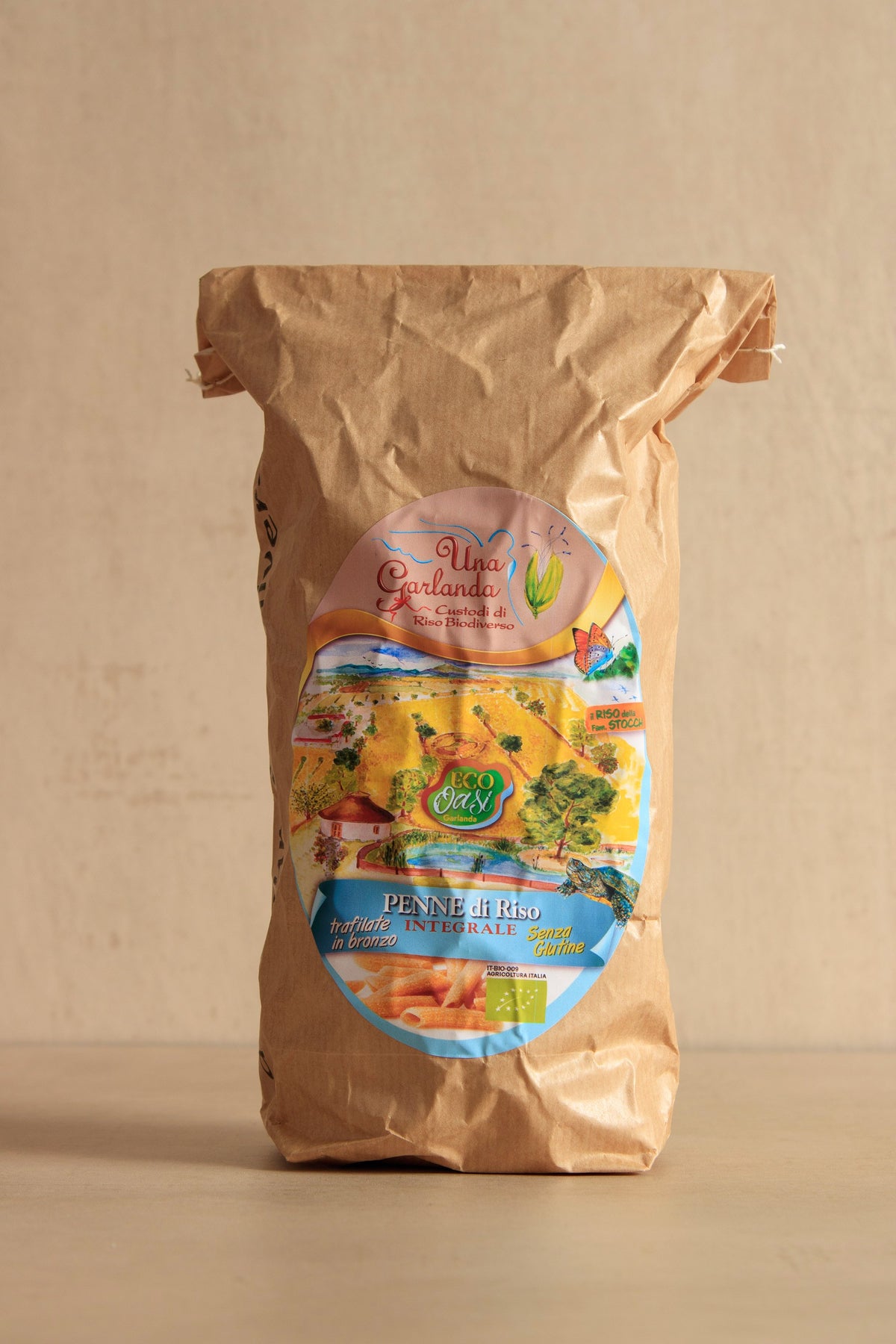
Yes. Una Garlanda's spaghettini and penne are made from whole grain rice, with no wheat. Cook them in plenty of salted boiling water and taste a minute or two before the time on the pack: rice pasta goes from al dente to soft quickly. Drain, toss with the sauce right away and add a splash of the cooking water to bring it together.