Skip to product information
1 of 1
Acetaia Guerzoni EMILIA ROMAGNA

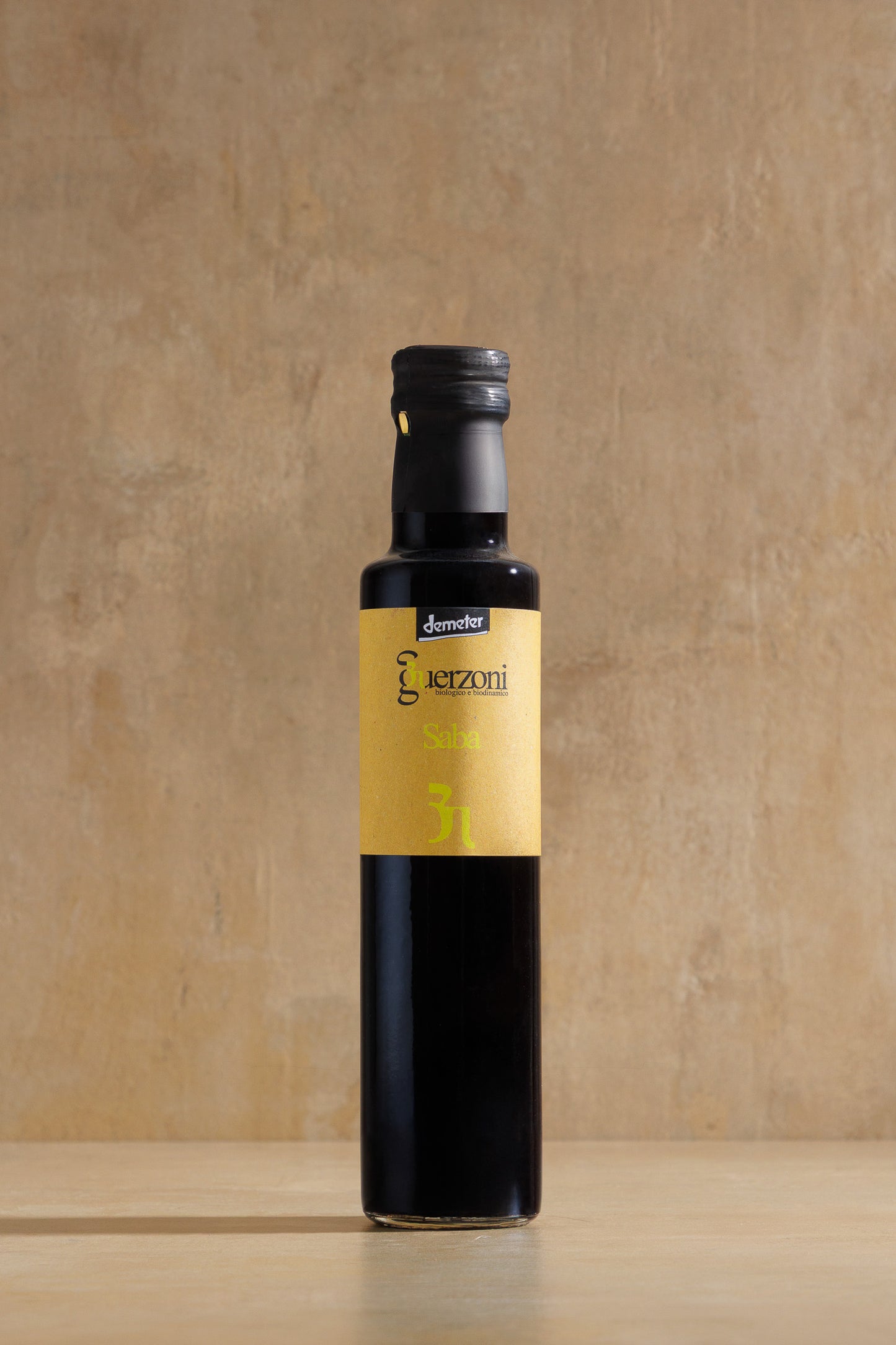
Saba – Cooked Grape Must Condiment

Saba – Cooked Grape Must Condiment

Regular price $16.00
Regular price Sale price $16.00
Sale Ships July 2026
Taxes included. Shipping calculated at checkout.
Quantity

An ancient Italian sweetener, rediscovered.

Cooked grape must, slow-reduced over open fire until it concentrates into a glossy, dark, fruity syrup. Sweet without being cloying, far more interesting than honey or maple.

Mahogany-dark and viscous, with the round sweetness of dried fig, plum and raisin and a faint tannic backbone from the grape skins. Pours like cold honey, lingers like good port.

The original balsamic. Saba (also called sapa or vincotto) has been made in Modena for over two thousand years. Balsamic vinegar begins as saba, then ages in barrels for decades.

Demeter biodynamic. Guerzoni grows their grapes biodynamically, in harmony with lunar and cosmic rhythms, on certified organic and Demeter land. Slow-cooked in copper kettles. No additives, no added sugar.

Why you'll love it

  • An ancient pre-sugar sweetener, made the original way
  • One ingredient: organic biodynamic grape must, nothing added
  • Slow-cooked in copper kettles over open fire
  • Far more complex than maple or honey
  • A pantry secret weapon for both savory and sweet uses

How to enjoy it

  • Drizzle over yogurt, ricotta or vanilla gelato
  • Brush on roasted carrots, squash or pork
  • Whisk into salad dressings or pan sauces
  • Stir into oatmeal, sangria or cocktails

Specifications

  • Producer: Acetaia Guerzoni
  • Origin: Modena, Emilia-Romagna, Italy
  • Ingredients: Organic biodynamic grape must.
  • Allergens: Contains sulphites (naturally occurring).
  • Net contents: 250 ml (8.5 fl oz)
  • Certification: Organic, Demeter Biodynamic
  • Storage: Cool, dry place. Refrigerate after opening.

🌱 Organic | 🥬 Vegan | 🍇 Cooked grape must | 🌱 Biodynamic | 🇮🇹 Made in Modena

Educational information only. Not intended as medical advice.

Terra Sacra Field Notes — Health Properties

  • Polyphenol-rich: grape must concentrates antioxidants from the whole grape.
  • No added sugar: all sweetness is natural grape sugar.
  • Lower acidity than balsamic: easier on the stomach.
  • Mineral-rich: trace potassium and iron from biodynamic soils.
  • Demeter standard: the most rigorous biodynamic certification.
View full details

Frequently Asked Questions

Are these ready to use, or do I need to cook them first?
Ready to heat — not to cook from scratch. Warm the sauce in a pan, add freshly drained pasta with a cup of the cooking water saved, finish everything together for 60 seconds with a drizzle of extra virgin olive oil. The pasta finishes cooking in the sauce. The starchy water does the binding. No long simmering needed — that would just drive off the flavor that was already built correctly at the source.
What is Piennolo del Vesuvio — and why does it matter?
Piennolo del Vesuvio DOP is an heirloom cherry tomato grown on the volcanic slopes of Vesuvius. Thick skin, very low water content, exceptional sugar-acid balance, and minerals from volcanic soil that no other growing region can replicate. Traditionally harvested in August and stored in hanging clusters through winter, slowly drying and concentrating as they go. In a sauce, Piennolo is immediately recognizable — brighter, more structured, more complex. This is the kind of tomato that makes you understand why Italian cooks talk about tomato varieties the way wine people talk about terroir.
What actually separates a great Italian sauce from a mediocre one?
The ingredients list. A great sauce has three or four items: tomatoes, olive oil, salt, a herb. That’s it. Added sugar means the tomatoes weren’t good enough. Starch thickeners, citric acid, or stabilizers mean the same thing. Organic certification matters too — in a 2026 investigation of 16 Italian passate, Italy’s leading independent consumer testing magazine found that 8 of the 16 brands tested positive for spirotetramat, a pesticide banned by the EU in October 2025 for suspected reproductive toxicity, with some samples approaching the legal limit. Organic certification means an independently audited clean supply chain — no synthetic pesticides, no spirotetramat. When a sauce also names the tomato variety on the label, you’re looking at a producer confident enough in their raw material to stake their identity on it.
How long does an opened jar keep?
4–5 days, sealed, in the fridge. No preservatives means these behave like freshly cooked tomato sauce — not like something engineered for a six-month pantry life. Reheat gently in a pan. That’s it.